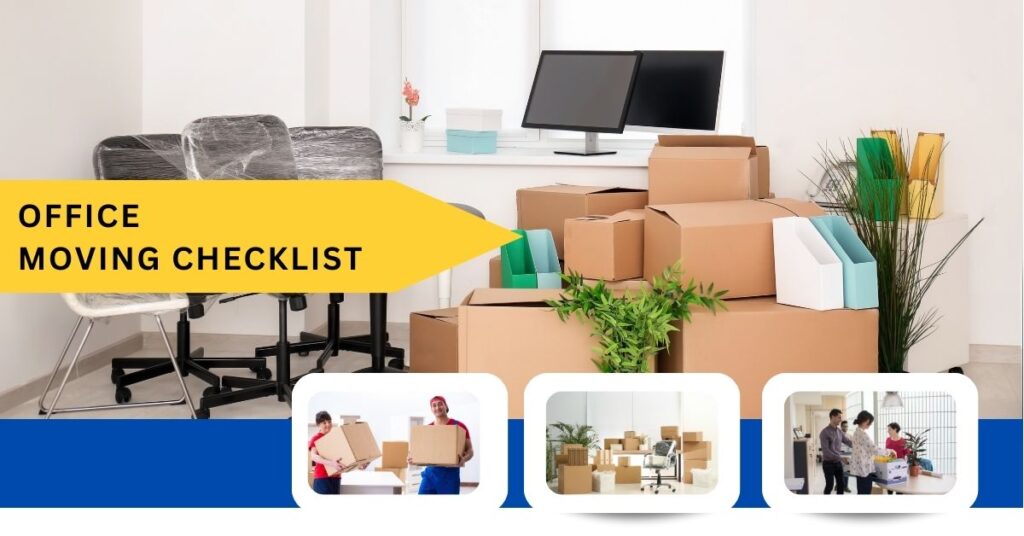
Office shifting is a major decision for any business. Whether you are relocating a startup office or planning a corporate move for an established company, moving without proper preparation can lead to productivity loss, operational disruptions, data management challenges, and unnecessary expenses.
According to industry best practices for office relocation, planning should ideally begin several months in advance. Early preparation helps minimise business downtime, ensures better coordination, and makes the overall transition smoother and more efficient.
In this detailed Office Shifting Checklist 2026, we will walk you through every essential step you should take before relocating your office, helping you plan a successful and hassle-free move.
Before we proceed, we would like to mention that if you are looking for trusted and certified packers and movers for your office relocation in Noida, Greater Noida, or Delhi-NCR, you can contact Bhagwati Packers Movers Noida (BPMN). We bring over 28 years of experience in the packing and moving industry.
For More Information Visit – Packers and Movers in Noida
1) 6 Months Before Shifting: Planning and Budgeting
One of the most crucial aspects of a successful office relocation is planning. Experts generally recommend starting the planning process several months in advance for medium to large-scale office moves.
This provides ample time to coordinate with vendors, arrange for packing, prepare the infrastructure, and minimize the risk of operational disruptions during the move.
A: Choose a New Office Location
Selecting a new office involves much more than just comparing rent or office size. The location you choose can directly impact employee convenience, productivity, and your company’s professional image.
Before finalising the new office space, consider the following factors:
- Commute convenience for employees
- Connectivity to public transport
- Parking facilities
- Internet and telecom infrastructure
- Power backup systems
- Scope for future expansion
- Surrounding business and commercial environment
If your business involves frequent client interactions, the office location can also influence your brand image and customer experience.
A1: Check for Safety and Regulatory Compliance at the New Office
Absolutely. Before signing a lease or finalising the move, it is essential to ensure that the new office meets basic safety and regulatory compliance requirements.
Key aspects to check:
- Fire safety systems
- Emergency exits and evacuation routes
- Building security measures
- Compliance with electrical safety standards
- Elevator and lift capacity
- CCTV surveillance coverage
- Access control systems
Creating a safe work environment is vital for the safety of employees, critical business documents, and valuable office equipment.
A well-maintained and compliant office space helps ensure uninterrupted business operations—even after relocation—and minimises operational risks.
B: Create a Moving Budget

Underestimating the cost of an office move is considered one of the most common mistakes.
Include the following expenses when preparing the budget:
- Packers and movers charges
- Packing materials
- Transit insurance
- Furniture dismantling
- IT equipment handling
- New office setup expenses
- Utility installation charges
- Signage replacement costs
According to corporate relocation planning guides, obtaining quotations from multiple movers and comparing costs is a crucial step in budget planning.
Budget Planning Tips
- Compare at least three quotations
- Clarify any hidden charges upfront
- Set aside an emergency fund
- Factor in GST and additional taxes
C: Review Your Old Lease — Check Deposit and Penalty Terms
Many companies overlook lease-related clauses during an office move.
Check the following before confirming the move:
- Security deposit refund policy
- Notice period requirements
- Early termination charges
- Property restoration clauses
- Outstanding maintenance dues
If prior notice to the landlord is required, incorporate that timeline into your relocation plan.
2) 3 Months Prior: Legal, Vendor, and Stakeholder Management
Operational and legal planning should commence once the relocation date is finalised.
This phase is crucial for communication and coordination.
A: Select a Moving Company

Experienced movers play a vital role in office relocation.
When selecting a certified packers and movers company based on industry recommendations, verify the following aspects:
- Corporate relocation experience
- Available manpower
- Packing standards
- Equipment handling capabilities
- Customer reviews
- Service coverage
Office relocation guides also emphasize the importance of verifying the movers’ experience and available resources.
A1: Is Insurance Necessary for an Office Move?
If the office contains:
- Servers
- Workstations
- Laptops
- Printers
- Networking devices
- Sensitive equipment
…then transit insurance should be considered.
Insurance can provide financial protection in the event of unforeseen damage or loss.
A2: What to Confirm with the Moving Company?
Confirm the following before finalizing the booking:
- Who will provide packing materials
- Whether loading and unloading are included
- Availability of insurance
- Relocation completion timeline
- Availability for weekend moves
- Additional charges
B: Inform Clients, Vendors, and Stakeholders
Communication regarding the move should not be delayed until the last minute.
Industry relocation checklists advise informing vendors and clients in advance to avoid communication gaps.
Inform:
- Existing clients
- Suppliers
- Vendors
- Service providers
- Banking partners
- Courier partners
Also:
- Update email signatures
- Plan for updating the website address
- Revise social media profiles
C: Create a Floor Plan for the New Office
The floor plan should be ready before the move. This allows for the efficient organization of:
- Furniture placement
- Workstation setup
- Meeting rooms
- Reception areas
- Storage areas
A pre-planned layout saves significant time on moving day.
D: Update Licenses and Business Registration Addresses
You may need to update legal records after the office move.
Verify the following based on your business type:
- GST registration
- Trade license
- Bank records
- Vendor agreements
- Insurance documents
- Business registration
Delays in updating addresses can lead to future compliance issues.
3) 1 Month Prior: IT, Internet, and Equipment
Delays in IT and communication systems often cause the most disruption during an office move. Therefore, technology-related plans should be finalized approximately one month in advance.
A: Plan Internet and Telephone Installation
Internet connectivity and communication systems should be ready at the new office beforehand.
Checklist:
- Confirm the installation date with the ISP.
- Assess required bandwidth.
- Consider a backup internet connection.
- Plan for VoIP or EPABX migration.
- Schedule a test for conference room connectivity.
Timely setup of communication infrastructure is crucial for seamless business operations.
B: Handling Computers, Servers, and IT Equipment
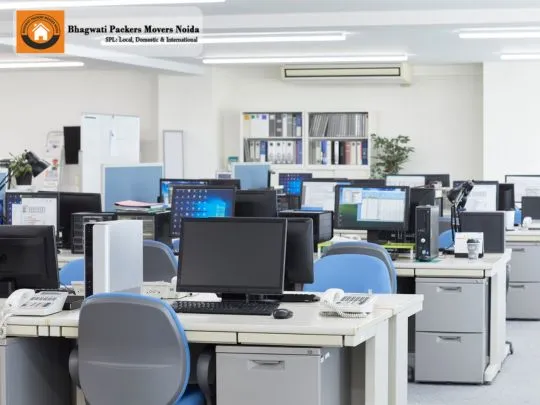
Random packing of office IT assets can lead to damage and increase the risk of downtime.
Recommended approach:
- Create an asset inventory.
- Label each device.
- Pack cables and accessories in separate zip-lock bags.
- Prioritize the handling of servers and networking equipment.
- Document the shutdown sequence for critical systems.
Critical equipment requires special packing and tracking.
C: Store Data Backup
Data can be at risk during migration due to hardware handling, power interruptions, or transport-related issues.
Pre-migration steps:
- Create a full data backup.
- Verify the cloud backup.
- Maintain server images or snapshots.
- Secure critical business files separately.
- Test the backup restoration process.
Important
Do not consider data backup an optional step; it is a core component of business continuity.
4) 2 Weeks Prior: Packing and Team Communication
The relocation execution phase has now begun. Coordination and organization play a crucial role here.
A: Brief the employees – ensure there is no confusion.
Communication regarding the move must be clear and documented.
Cover the following in the briefing:
- Relocation dates and timeline
- Department-wise responsibilities
- Packing instructions
- Remote work arrangements (if applicable)
- Emergency contacts
The timeline should be clearly communicated to employees and stakeholders.
B: Label every box.
Proper labeling drastically reduces unpacking time.
Include the following in the labeling:
- Department name
- Floor/Area name
- Box number
- Fragile/Heavy indicators
- Priority level
Color-coded labels can also be used.
C: Create an inventory list.
Inventory tracking makes it easier to identify missing items.
Include the following in the inventory list:
- Asset ID
- Description
- Condition
- Destination area
- Person responsible
Maintaining a list of important office assets is considered a best practice for relocation.
D: Remove branding and signage from the old office.
Do not forget to remove the old office branding during the final stages.
Checklist:
- Reception signage
- Directional boards
- Wall branding
- Glass decals/stickers
- Parking signs
This step is crucial for both the landlord handover and maintaining brand consistency.
5) Moving Day Checklist
Focus on task execution, supervision, and risk management on moving day.
A: Designate an On-Site Team Leader — Define Roles

Having a single point of contact minimizes confusion.
Appoint the following:
- Operations Coordinator
- IT Coordinator
- Vendor Liaison
- Inventory Supervisor
- Employee Communications Lead
Clearly defining responsibilities is essential for smooth operations.
B: Handling Fragile and Sensitive Equipment
These items require special care:
- Servers
- Networking devices
- Monitors
- Printers
- Confidential documents
- Lab/technical equipment
Ensure secure packing and supervised loading.
C: Final Walkthrough of the Old Office
Check the following before the handover:
- All rooms have been cleared
- Storage areas have been checked
- Restrooms have been checked
- The server room has been inspected
- Power systems have been turned on/off as required
Maintaining a record of the inspection helps avoid future disputes.
D: Return Keys and Access Cards to the Landlord
After the move is complete:
- Return access cards
- Hand over keys
- Obtain a receipt/confirmation for the security deposit
- Note down meter readings
- Sign the handover document
E: Quick Master Checklist for Moving Day
Task Status
Internet installation confirmed Ok
Data backup completed Ok
Inventory finalized Ok
Boxes labeled Ok
Staff informed Ok
Moving company confirmed Ok
Fragile equipment packed Ok
Old office inspection completed Ok
Keys and access cards returned Ok
6) Checklist for Settling Into the New Office

The office move is complete, but success isn’t achieved just yet. True success lies in your team starting work in the new office without disruption. Therefore, the post-move phase deserves as much importance as the planning and the moving day itself.
The first 7 days after the move are crucial. This is the period when operational issues are identified and resolved.
A: Test Internet, Phones, and Network First
Verify communication systems immediately after the office setup.
Checklist:
- Test internet speed
- Verify LAN connectivity
- Check Wi-Fi access points
- Test printers and scanners
- Verify EPABX/VoIP systems
- Test video conferencing systems
In today’s digital business environment, network downtime directly impacts productivity.
B: Update Google Business Profile Address
Updating the Google Business Profile (GBP) address is one of the most important digital tasks after shifting offices.
Updating the address ensures:
- Customers find the correct location
- Local SEO impact is maintained
- Google Maps navigation errors are reduced
- Trust and credibility improve
B1: Remove the old address from Google Maps
If the office has fully relocated:
- Log in to the Google Business Profile dashboard
- Open the ‘Business Information’ section
- Update the address
- Complete the verification process
- Update the website and social media profiles as well
Important: Maintain NAP (Name, Address, Phone Number) consistency when updating the new address; this is essential for local SEO.
C: Ensure a Comfortable Setup for Employees

An office relocation directly affects employees.
C1: How to help employees settle into the new office?
- Properly assign workstations
- Conduct team orientation
- Explain meeting room usage
- Share parking instructions
- Point out emergency exits
- Explain common facilities
The sooner employees feel comfortable, the sooner productivity will return to normal.
D: Improvements for the first week
Maintain an observational mindset during the first week after the move.
Check for:
- Internet issues
- Seating issues
- Power backup problems
- AC and ventilation
- Meeting room requirements
- Storage requirements
Gather employee feedback and implement improvements.
7) Common mistakes to avoid during office shifting
Many office moves become unnecessarily expensive and stressful due to a lack of planning.
A: Leaving IT setup for the last minute
This is the most common mistake.
If the internet, server, and networking needs aren’t planned before the move:
- Business downtime could increase
- Employee work could come to a halt
- Client servicing could be impacted
B: Informing stakeholders too late
If vendors, clients, and partners aren’t informed on time:
- Deliveries could be missed
- Communication could break down
- Business reputation could be affected
C: Overlooking hidden costs in the budget
Many companies create budgets based solely on the movers’ quotation.
However, additional expenses arise, such as:
- Packing materials
- Insurance
- IT setup
- Utility installations
- New signage
- Cleaning charges
Therefore, always maintain a contingency budget.
8) 10 Proven Tips and Tricks from Bhagwati Packers Movers Noida (BPMN) for a Smooth Office Shifting in 2026

1. Declutter Your Office Before You Start Packing
Discard old files, broken furniture, and unused items before the move. Moving unnecessary items increases costs and simply transfers clutter to the new office.
2. Create a detailed inventory and label each box properly
List every item and use color-coded labels on boxes (e.g., “Finance – Box 3”). This prevents confusion on moving day and speeds up the unpacking process.
3. Inform your clients, vendors, and stakeholders in advance.
Inform your clients, vendors, and partners of the new address at least four weeks before the move. Late notification can impact both business continuity and trust.
4. Assign clear tasks and responsibilities to your team members
Appoint a move coordinator and assign specific responsibilities to each employee. This avoids duplication of work and ensures the process runs smoothly and finishes on time.
5. Prioritize employee comfort during the moving process
Brief employees on the new office route, parking, and facilities beforehand to minimize stress. Employees who feel at ease remain productive even during a move.
6. Plan and schedule the move for off-peak hours or weekends
Moving on weekends or at night ensures that normal business operations remain uninterrupted.
7. Prioritize mission-critical items and equipment
Pack servers, computers, and communication equipment first and with great care. If this equipment fails, entire business operations could come to a halt.
8. Hire professional and experienced office movers
Obtain quotes from at least three companies and request written, binding estimates. Experienced movers significantly reduce the risk of equipment damage and surprises on moving day.
9. Back up all data and secure the IT infrastructure before moving day
Save all data to the cloud or an offline backup, and take photographs of the equipment setup before the move. These backups will serve as your greatest safeguard in the event of data loss or hardware damage. The risk of data loss should never be overlooked.
10. Design a floor plan for your new office before the move
Plan the layout of the new office before moving—mark the locations of desks, storage units, and network points. This ensures the movers know exactly where to place each item, making the setup process faster. A pre-planned office layout makes the moving day process faster and more efficient.
9) How Bhagwati Packers Movers Noida Helps in Office Shifting?
Relocating an office is far more than simply moving items from one place to another.
It demands precise planning, patience, and a reliable team that stands by you at every step.
A well-structured office shifting checklist transforms potential chaos into a smooth, efficient process — covering everything from packing and labelling to updating address registrations — so your business never misses a beat.
This is exactly why Bhagwati Packers Movers Noida (BPMN) is the most trusted name for office relocation across Noida, Greater Noida, and the Delhi-NCR region, backed by over 28 years of industry experience.
Our dedicated team carefully packs and loads every essential office item — documents, furniture, décor, and equipment — with the utmost care.
The entire relocation process is carried out after office hours, so your daily operations remain completely unaffected.
What truly sets BPMN apart is our commitment beyond just moving. We provide expert guidance and legal assistance at no extra cost, so you can have a hassle-free experience from start to finish.
At Bhagwati Packers Movers Noida, success is not just a promise — it is a guaranteed experience.
Conclusion
Office relocation can be a complex process, but with proper planning, organised execution, and an experienced relocation partner, it can be made quite seamless.
If you are planning an office move in 2026, following a step-by-step office relocation checklist can significantly reduce downtime, unnecessary costs, and operational disruptions.
Frequently Asked Questions – Common Queries About Office Relocation
Q1: How Far in Advance Should I Start Planning an Office Shift?
A: Start planning at least 6 months before the move for medium to large offices. Following a proper office shifting checklist from day one ensures early planning, minimises downtime, reduces costs, and guarantees a smoother transition.
Q2: How Long Does an Office Relocation Typically Take?
A: Small offices usually relocate within 1–2 days, while medium to large offices may take 3–7 days, depending on size, distance, and setup complexity.
Q3: What is the Best Time to Shift an Office?
A: Weekends or after office hours are ideal for shifting, as they cause minimal disruption to daily business operations and employee productivity.
Q4: How Much Does Office Shifting Cost in Noida?
A: The cost depends on office size, distance, IT equipment volume, packing needs, and insurance. Always get at least 3 quotes and request a free on-site survey for an accurate estimate.
Q5: Is Transit Insurance Necessary During Office Relocation?
A: Yes, especially if your office has servers, laptops, networking devices, or sensitive equipment. Transit insurance provides financial protection against accidental damage or loss during the move.
Q6: How Do I Protect My Office Data During the Move?
A: Create a full data backup before moving day — including cloud backups and server snapshots. Never treat data backup as optional; it is a core part of business continuity.
Q7: How Should I Inform My Clients and Vendors About the Office Move?
A: Send a formal email or message at least four weeks before the move, clearly stating the new address, the date, and updated contact details. Also, update your website, email signature, and social media profiles.
Q8: What legal and Registration Updates are Needed After the Office Shift?
A: You must update your GST registration, trade license, bank records, vendor agreements, and business registration with the new address to avoid future compliance issues.
Q9: Why is Updating Google Business Profile Important After Shifting?
A: Updating your Google Business Profile ensures customers find your correct location, maintains your local SEO rankings, and prevents navigation errors on Google Maps.
Q10: What Mistakes Should I Avoid During Office Relocation?
A: The three most costly mistakes are delaying IT setup, informing stakeholders too late, and underestimating the budget. A detailed office shifting checklist helps you track every expense and task, ensuring nothing is missed on moving day.
Q11: How do I choose the Right Packers and Movers for my Office Move?
A: Before booking, always check the company’s experience, customer reviews, insurance coverage, and packing standards. Obtain at least three written quotes, inquire about hidden costs upfront, and select movers who offer a free on-site survey to provide an accurate estimate.
How to Estimate Packers and Movers Charges? Read This Guide